The Complete Guide to Working with Chatterton Homes
What You Get With Our Design & Build Service
We can cater for both clients who require a full design-build service, and those who have already commissioned a designer of their own.
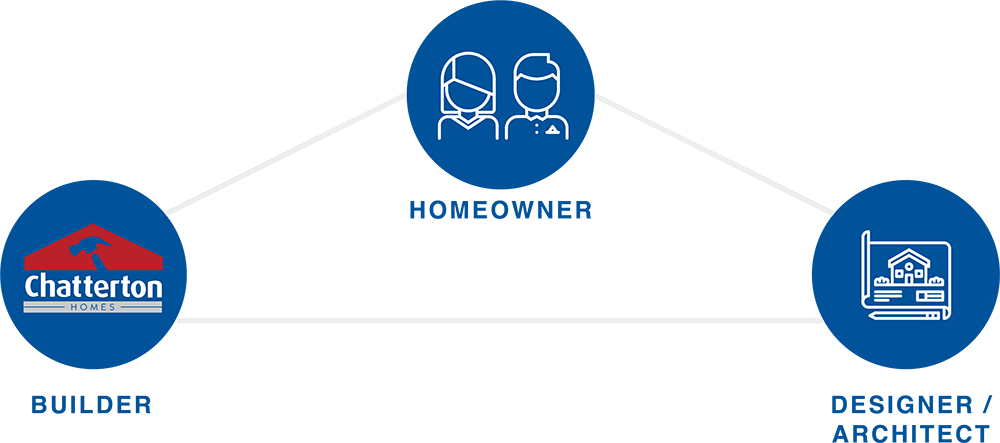
The key to both is the development of a strong relationship between client, designer and building team.
Key Inclusions:
- Access to our team’s knowledge and expertise throughout the process.
- An independent estimate of concepts providing confidence to proceed.
- Full fixed price proposal of final plans.
- Assistance with selections and access to secure online job management portal providing certainty around costs and timeframes.
- Full Project Management.
- All our designs consider all five passive house principles.
- Performance testing – Thermal modelling & air tightness testing
Find Out Why We Performance Test
DESIGN & BUILD
The Initial Meeting: A Crucial First Step
An initial meeting nuts out a lot.
We want to understand your ideas, priorities and budget, and what matters most to you.
You want reassurance that we can deliver what you need, from expertise and quality assurance through to trust and professionalism.
This meeting helps clarify which option best suits your unique needs and gives us the information required to progress to the next phase, whatever path you decide to take.
Book an Initial Chat
The Key to Success
Our Design & Build Process
Our design build process provides clear direction for every party for every stage, alongside tangible outcomes.
PHASE 01.
Connecting With The Right Designer
Through our previous discussions and meeting(s) we have established your needs and priorities.
We introduce suitable designers who would meet those needs and accompany you to that initial meeting.
We find this collaborative approach of homeowner, designer and builder produces the best outcomes.
By now, we have confirmed what level of energy efficiency and performance is required.
A preliminary contract is presented incorporating the designer’s proposal and our costs to price the plans. This clearly identifies our obligations and inclusions.
PHASE 02.
Concepts & Estimate Of Concepts
Concepts are completed by your chosen designer with input from our team.
Depending on your designer this stage may include preliminary sketches prior to concepts, house siting & aspect options, and any other items requested and specifically described in the scope of the design proposal.
No engineering work or detailed selections have been completed at this time.
We complete a preliminary estimate from your concepts with the aim of providing you confidence to proceed to the next stage.
Thermal modelling of your design is completed, and potential modifications discussed.
Concepts must be approved before moving to phase 3.
PHASE 03.
Working Drawings & Fixed Price Proposal
The designer completes full working drawings and acquires the engineering necessary for your design on your unique site.
At the same time, we work with you to select the remaining items needed to complete your home that are not specified in your plans, such as joinery, plumbing hardware, flooring, tiling and window detail.
The result is your contract inclusions reflect your unique choices, specifications and quotes meaning more accurate costings. It also reduces delays to the build process.
Once the plans and inclusions have been confirmed we complete a detailed and comprehensive fixed price proposal. We choose to use an independent Quantity Surveyor and request job specific quotes to provide peace of mind.
PHASE 04.
Preparing To Build
Once the proposal has been accepted, we prepare your building contract for signing and request your deposit. We also submit for building consent and a build start date is agreed.
Our contracts are industry approved New Zealand Certified Builders Contracts, and we provide a 10-year workmanship guarantee for further peace of mind.
A build schedule is completed. Our experienced Project Manager oversees the construction of your home, and your exclusive Site Foreman leads the team charged with constructing your home.
You can keep up to date with communications, schedules, variations & approvals at any time on your online job portal. We also supply our ‘Client Expectations’ booklet, which details each stage of the build and answers common questions.
Don’t forget, we complete an air tightness test at pre line and completion stage.
Upon Completion of your build, we jointly undertake a final quality control inspection. We also explain our after-build management process and present to you the keys for your new home.
Handover is a celebratory affair!
Build Only Process
Already chosen your designer but would like to work with us?
If you have already contracted a designer, our role is to support the design process in a more advisory role. We are responsible for providing an estimate of concepts, assisting with selections, and completing a fixed build cost to take to contract.
The process is the same as the Design & Build except your designer will be accountable for the design work, including engineering, thermal modelling, and building consent.
We still recommend a close relationship between homeowner, designer, and builder throughout to ensure continuity, a greater understanding of the desired outcomes & priorities, and to offer our specialist advice on construction methods and costs.
Design & Build FAQs
Do you offer house plans or house and land packages?
We offer a range of high-performance house plans and can assist you in pairing one of these with suitable land. While we don’t offer pre-packaged house and land deals, we can help guide you through both elements to create a complete solution.
Do you have house plans available?
Yes. We offer a selection of thoughtfully designed home plans to suit different budgets and requirements:
- High-performance plan range:
Fixed-price homes with defined inclusions and options to upgrade. These plans are energy modelled and incorporate Passive House principles to ensure strong performance, comfort, and efficiency. - Inspiration range:
Concept designs only with guide pricing, offering flexibility to customise and explore different layouts.
Can you help me find land for my build?
Yes. We have relationships with developers in North Canterbury and occasionally other areas, and can help you identify suitable sections.
We can:
- Share current land opportunities
- Help assess whether a section suits one of our high-performance plans
- Guide you through next steps once land is secured
Can you combine a house plan with a section?
Yes. Once you’ve identified a section, we can work with you to place one of our home designs on the site and provide pricing based on your chosen plan and specifications.
This allows for a more tailored approach, ensuring the home suits both the site and your goals.
Alternatively, we can discuss a custom design and build option as an option.
Can I customise a house plan?
Yes. Our plans can be tailored to suit your site, budget, and performance goals.
Bottom line
We don’t offer fixed house and land packages, instead, we help you combine the right section with a high-performance home design to create a solution tailored to you.
View Plan Range
What is your cost per m2 (square metre rate)?
The cost per square metre (m² rate) for a high-performance home can vary significantly depending on design, materials, and level of performance. Because every home is unique, the m² rate can differ widely, even for homes with the same floor area.
For this reason, we focus on total project cost and overall value, rather than relying solely on a rate per m².
Why does the m² rate vary so much?
Several factors influence the cost per m²:
- Design and building form: Shape, complexity, and structural requirements
- Material and specification choices: Chosen materials and components can vary widely in cost – due to design or homeowner selections.
- Room types and layout: Kitchens and bathrooms cost more per m² than living spaces or bedrooms
- Performance level: Higher levels of energy efficiency require more detailed construction
For example, increasing floor area can reduce the m² rate, but increase the overall build cost. High-performance homes often prioritise efficient layouts, which may increase the m² rate while reducing total cost.
How does this apply to a design and build project?
With our design and build service, we don’t work to a fixed m² rate. Instead, we:
- Work within your budget and priorities
- Provide guidance on what can be achieved for your investment
- Help you allocate budget to the areas that deliver the most value
This approach ensures your home is tailored to your goals, rather than constrained by an average rate.
Are there fixed-price options available?
Yes. Our high-performance plan range offers:
- Fixed pricing for a defined design and inclusions
- A clear understanding of cost upfront
- Options to upgrade depending on your budget
This can be a good option if you’re looking for more cost certainty.
Is cost per m² a good way to compare homes?
Cost per m² can be misleading as it doesn’t reflect:
- Build quality and durability
- Energy performance and comfort
- Design complexity and specification level
Two homes with the same m² rate can deliver very different outcomes.
Bottom line
There is no single m² rate for a high-performance home. The best approach is to focus on total project cost, design efficiency, and performance outcomes to ensure you get the best value for your investment.
What designers do you work with?
We collaborate with a range of experienced designers and architects, offering different styles, practice sizes, and budget levels. This allows us to match you with the right designer for your project.
All of our designers have experience in high-performance homes and understand the requirements of building for comfort, health, and energy efficiency.
Can I choose my own designer?
Yes. If you already have a designer or architect in mind, we’re happy to work with them, provided they are open to a collaborative, team-based approach and understand the principles of high-performance design.
How do you match me with a designer?
Once we understand your:
- Design preferences and style
- Budget and priorities
- Site and project requirements
We can recommend designer options that best suit your needs. This ensures the design process starts in the right direction from the outset.
Why is the designer important in a high-performance home?
The designer plays a critical role in achieving a successful outcome. High-performance homes require careful integration of:
- Orientation and layout
- Building form and structure
- Insulation and airtightness strategies
- Window placement and shading
- Ventilation design
Working with a designer who understands these elements helps ensure the home performs as intended.
How does the design and build team work together?
We prioritise a team-first approach, where the homeowner, designer, and builder collaborate from the early stages of the project.
This approach:
- Reduces risk and miscommunication
- Improves buildability and cost control
- Ensures performance goals are maintained throughout the process
Bottom line
We work with a carefully selected group of designers experienced in high-performance homes and can recommend the right fit for your project. A collaborative, team-based approach ensures the best outcome for both design and performance.
What do design costs typically look like?
Design costs vary depending on the designer, project requirements, and the size and complexity of your home. Because every project is different, design fees are tailored to suit your specific brief, site, and level of service required.
What factors affect design costs?
Several key factors influence the cost of designing your home:
- Type of designer:
Draughtspersons are typically the most cost-effective, followed by architectural designers, with registered architects generally at the higher end. - Project size and complexity:
Larger or more complex homes require more design time and coordination. - Level of service and detail:
Some designers include detailed analysis of site, climate, and performance, while others offer a more streamlined service. - Practice structure:
Larger firms may involve multiple team members, while smaller practices may offer a more direct, one-on-one approach.
How do you help manage design costs?
As part of our design and build process, we help guide you to the right designer based on your:
- Budget
- Design goals and style preferences
- Site conditions and constraints
- Performance requirements
We ensure the design approach aligns with both your vision and your budget from the outset.
How are design fees confirmed?
Once we understand your project, we will:
- Recommend suitable designers
- Arrange introductions and initial discussions
- Request a detailed fee proposal on your behalf
This means you’ll have a clear understanding of design costs before making any commitment.
Do higher design costs mean a better outcome?
Not necessarily. The best outcome comes from choosing a designer whose experience, approach, and communication style align with your project.
For high-performance homes, it’s particularly important that your designer understands:
- Building performance and energy efficiency
- Site-specific design considerations
- Integration with the build process
Bottom line
Design costs vary depending on the designer and project scope, but we help you navigate your options and obtain clear, upfront pricing. This ensures you can make an informed decision and achieve the best value for your investment.
I already have house plans, can you price them?
Yes, we can price your existing plans. We provide detailed, accurate costings using an independent Quantity Surveyor (QS), ensuring a high level of transparency and reliability.
How does the pricing process work?
For full pricing, we engage an independent QS who:
- Provides detailed, line-by-line costings
- Reduces the risk of hidden costs or unexpected variations
- They include project specific quotes we have requested from our suppliers and subcontractors
This process gives you a clear and realistic understanding of your build cost.
Is there a cost to price my plans?
Yes, there is a nominal fee for this service. This is just to cover the cost of the QS process and the time required to produce an accurate and detailed fixed price.
While more involved than a basic estimate, this approach helps avoid:
- Inaccurate allowances
- Budget blowouts later in the project
- Uncertainty around final costs
What if my plans don’t include enough detail?
This is common. To provide accurate pricing, we may ask you to:
- Confirm key selections (e.g. finishes, fixtures, systems)
- Clarify any missing or ambiguous details
This avoids relying on generic allowances and ensures the pricing reflects your actual project.
Can you provide pricing at concept stage?
Yes. We offer a Concept Estimate to help assess feasibility early in the design process.
This includes:
- An independent QS estimate based on concept plans
- Guidance on whether the design aligns with your budget
- The opportunity to refine or adjust before progressing to detailed drawings
This early-stage pricing helps you make informed decisions and avoid costly redesigns later.
Why use a Quantity Surveyor (QS)?
Using an independent QS alongside choosing all components of your home upfront (selecting items not specified in plans) provides greater transparency across all cost components and confidence in your project budget.
It also allows you to move into the build phase with fewer surprises.
Bottom line
Yes, we can price your existing plans, but we take a detailed, accuracy-first approach. By using an independent QS and working through key selections, we provide reliable pricing that helps you move forward with confidence.
How long does the design process take?
The design process for a new home typically takes 6–12 months, depending on the complexity of the project, the site, and the level of design required.
Simple projects can be completed in around 6–8 months, while more complex or architectural homes may take 12 months or longer.
What affects how long the design process takes?
Several factors influence the overall design timeline:
- Site conditions:
Slope, soil type, access, and orientation can all impact design complexity - Project scope:
Size, style, and whether you’re developing one design or multiple options - Type of design:
Architectural homes typically take longer than more conventional designs - Existing plans or ideas:
Having a clear starting point can speed up the process - Design exploration:
Considering different layouts, orientations, or site positions - Groundworks and foundations:
Engineering requirements can add time - Designer availability:
Workload and structure of the design practice - Performance requirements:
Energy modelling, verification, or certification (e.g. Passive House) - Client decisions and revisions:
The number of changes and refinements during the process
What happens during the design process?
As part of our design and build service, the process typically includes:
- Initial briefing and concept design
- Design development and refinement
- Concept estimate (early-stage pricing to test feasibility)
- Detailed design and documentation
- Full fixed-price investment (based on completed drawings)
This staged approach ensures your design aligns with both your vision and your budget.
Can the design process be faster?
Yes. Choosing from our high-performance plan range can significantly reduce design time.
- Only a site-specific plan is required
- No full custom design process needed
- Faster path from concept to pricing and build
How can I help keep the design process on track?
You can help streamline the process by:
- Being clear on your priorities and budget early
- Making timely decisions when required
- Limiting major design changes once the process is underway
Bottom line
The design process typically takes 6–12 months, depending on complexity. A well-managed, collaborative approach ensures the design is right, both in terms of performance and budget, before moving into construction.
How do you manage our build budget and avoid overspending?
We manage your build budget through a structured, transparent process that focuses on upfront planning, clear pricing, and controlled variations—helping minimise the risk of unexpected costs.
How do you keep build costs under control?
We use several key strategies to maintain budget certainty:
- Fixed price contract
Your build is delivered under a fixed price agreement, giving you clarity and confidence in your total investment. -
Detailed selections before contract
Many important items are not fully specified in standard plans. We work with you early to:- Confirm key selections and finishes
- Include supplier quotes or realistic allowances
- Ensure the contract reflects your actual preferences
This reduces the reliance on estimates and helps avoid surprises later.
How do you handle changes during the build?
We follow a transparent variation process:
- Any changes (variations) are clearly priced and documented
- All variations require homeowner approval before proceeding
- You remain in full control of any changes to cost or scope
What systems do you use to prevent cost overruns?
We combine people, process, and systems to keep your project on track:
- Dedicated Project Manager overseeing your build
- Job management systems to track progress, costs, and timelines
- Strong coordination between builder, suppliers, and subcontractors
Together, this reduces the risk of delays, miscommunication, and budget overruns.
Why is upfront planning so important?
The biggest cause of budget overruns in residential builds is unresolved decisions early in the process.
By focusing on:
- Upfront selections
- Clear documentation
- Accurate pricing
We significantly reduce uncertainty and improve cost control throughout the build.
Bottom line
We manage your budget by fixing as many decisions as possible upfront, using a fixed price contract, and maintaining full transparency throughout the build. This approach gives you greater certainty, control, and confidence in your investment.
When can you start building my home?
We discuss your preferred timeline at the very start of the design process. Build start dates depend on design completion, consents, and our current workload, so early planning is essential.
How do you schedule build start dates?
We operate a build slot system, which allows us to:
- Plan projects carefully and maintain quality
- Provide realistic and reliable start dates
- Ensure each build receives the attention it requires
By allocating build slots in advance, we avoid overcommitting and help keep your project on track.
How far in advance should I get in touch?
We recommend getting in touch as early as possible. Ideally once you have secured land and are ready to begin your building journey.
This allows us to:
- Understand your timeline and goals
- Align your design process with an available build slot
- Avoid delays once your plans and consents are ready
What needs to happen before construction starts?
Before your build can begin, several key steps need to be completed:
- Design and documentation finalised
- Building consent approved
- Pricing confirmed and contract in place
- Selections and specifications agreed
Once these are complete and a build slot is allocated, we can begin construction.
Can you guarantee a start date?
We aim to provide clear and realistic timeframes, but exact start dates can depend on:
- Consent timeframes
- Design complexity
- Client decision timelines
Our structured scheduling system helps minimise uncertainty and keep your project moving forward.
Bottom line
The sooner you engage with us, the better we can align your design, consent, and build timeline with an available build slot, ensuring a smooth and well-managed start to your project.
How long will it take to build my home?
The build phase for a new 3/4 bed home typically takes 6–12 months, depending on the size, complexity, and site conditions. More complex or architectural homes may take longer.
Once we understand your design, site, and scope, we can provide a more accurate build timeframe.
What factors affect build time?
Several key factors influence how long your build will take:
- Design complexity:
Simpler homes build faster than highly detailed architectural designs - Site conditions:
Sloping sites, access challenges, or complex ground conditions can add time - Size of the home:
Larger homes generally take longer to complete - Construction method and performance level:
High-performance homes require greater attention to detail. SIPs construction can reduce time compared to other advanced building systems. - Weather and external factors:
Conditions during construction can affect progress
How accurate is the build timeframe?
We aim to provide realistic and achievable timeframes based on your specific project.
Our build slot system helps us:
- Plan resources effectively
- Maintain quality across all projects
- Reduce delays caused by overcommitting
Why is build time important to plan early?
We understand that timing is critical, especially if you are:
- Renting during the build
- Managing bridging finance
- Coordinating a move from your current home
By discussing timelines early, we can help you plan with greater certainty and reduce stress throughout the process.
How can I help keep the build on schedule?
You can help by:
- Finalising design and selections before construction starts
- Avoiding changes once the build is underway
- Maintaining clear communication throughout the project
Bottom line
Most 3/4 bed homes take 6–12 months to build, depending on complexity. Early planning and a well-managed process help ensure your build stays on track and aligned with your timeline.
I have never built before, where do I start?
If you’re building for the first time, the best place to start is by understanding your priorities, budget, and site. These three areas form the foundation for a successful design and build process.
If you already have land, you’re in a great position to begin planning your home.
1. Identify your needs vs wants (set your priorities)
Start by separating what you need from what you want (this will differ person to person):
- Example Needs (essentials):
- Number of bedrooms and living spaces
- Functional layout for your family
- Home office if you work from home
- A warm, healthy, energy-efficient home, especially important for young families, older occupants, or anyone sensitive to cold or damp conditions
- Example Wants (nice-to-haves):
- Features like a butler’s pantry, large windows, skylights, or extra living spaces
- Lifestyle upgrades such as outdoor areas or balconies
Understanding your priorities helps guide decisions if trade-offs are needed.
2. Understand your constraints
Clear constraints help keep your project realistic and on track:
- Budget:
Establish a clear budget early to guide design decisions and avoid overspending - Site considerations:
- Size, shape, and slope of your land
- Ground conditions and foundation requirements
- Local covenants or council requirements (resource consent, setbacks, glazing area requirements etc.)
3. Talk to a builder early
One of the most valuable steps is engaging a reputable builder early in the process.
We can help you:
- Understand what’s achievable within your budget
- Guide you through the design and build process
- Recommend suitable designers
- Identify risks or opportunities early
Why is this approach important?
Starting with clear priorities and constraints, combined with trusted advice:
- Saves time during the design process
- Reduces costly changes later
- Helps your design team make informed decisions
- Creates a smoother, more enjoyable building experience
Bottom line
If you’re new to building, start by defining your needs, understanding your budget and site, and talking to a reputable builder early. This sets a strong foundation for a successful, well-managed project.
Successful Designer Partnerships